


Performance Marketing has changed the way businesses measure advertising success. Years ago, brands mostly guessed whether ads worked or not. Today, every click, conversion, and customer action tells a story. And honestly, that’s both exciting and overwhelming.
If you run digital ads, you probably see dozens of numbers inside Google Ads, Meta Ads, or analytics dashboards. But which metrics actually matter? Which KPIs show real business growth instead of vanity numbers?
That’s exactly what this guide explains.
We’ll break down the essential KPIs for digital advertising in simple language. No confusing jargon. No inflated marketing talk. Just practical insights that help beginners and business owners understand what success actually looks like.
What Are KPIs in Digital Advertising?
KPI stands for Key Performance Indicator. It’s a measurable value that shows how well your advertising campaigns perform.
Think of KPIs like a car dashboard.
Your speedometer tells you speed. Your fuel gauge tells you fuel levels. In digital advertising, KPIs tell you whether your campaigns generate traffic, leads, sales, or profits.
Without KPIs, businesses waste money very quickly. And yes, that happens more often than people think.
Why KPIs Matter in Performance Marketing
Performance marketing depends on measurable outcomes. Businesses pay for results, not just visibility.
KPIs help marketers:
- Track campaign success
- Improve ad targeting
- Reduce wasted ad spend
- Increase conversions
- Understand customer behavior
- Optimize future campaigns
According to Statista, global digital advertising spending crossed $700 billion in recent years. That means competition keeps increasing. Businesses that track the right digital advertising metrics usually outperform businesses that don’t.
Essential KPIs for Measuring Success in Digital Advertising
1. Click-Through Rate (CTR)
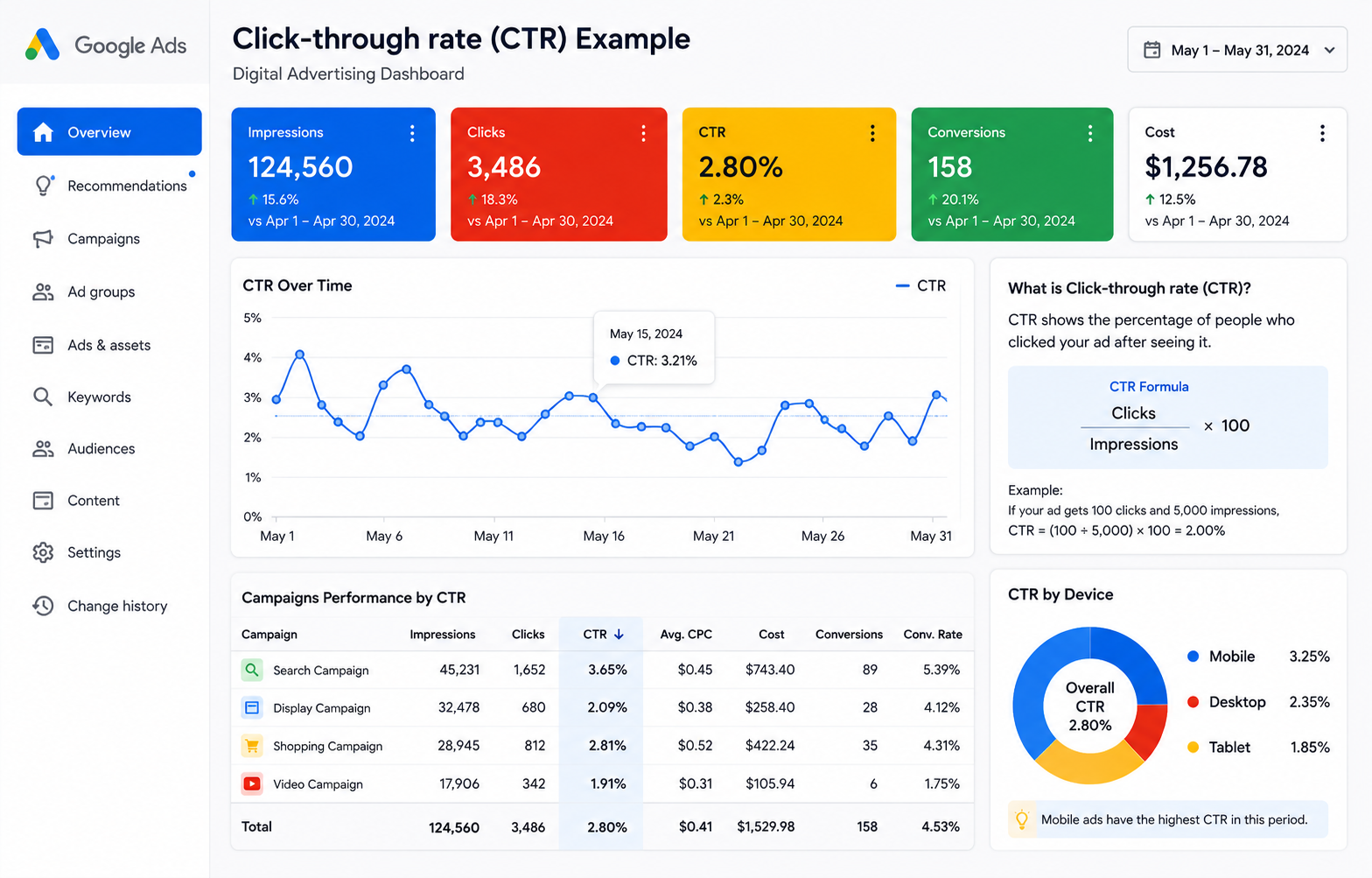
Click-through rate measures how many people click your ad after seeing it.
CTR = (Clicks ÷ Impressions) × 100
A high CTR often means:
- Your ad copy connects with users
- Your targeting works well
- Your offer attracts attention
But here’s the thing. A high CTR alone doesn’t guarantee sales.
Sometimes ads attract clicks but fail to convert. That’s why CTR should work alongside conversion tracking metrics.
2. Cost Per Click (CPC)
Cost per click tells you how much you pay whenever someone clicks your advertisement.
Lower CPC often means better efficiency. But cheap clicks don’t always mean profitable traffic.
- A ₹5 click that never converts wastes money
- A ₹50 click that generates a ₹5,000 sale becomes valuable
That’s why marketers combine CPC with conversion rate and ROAS analysis.
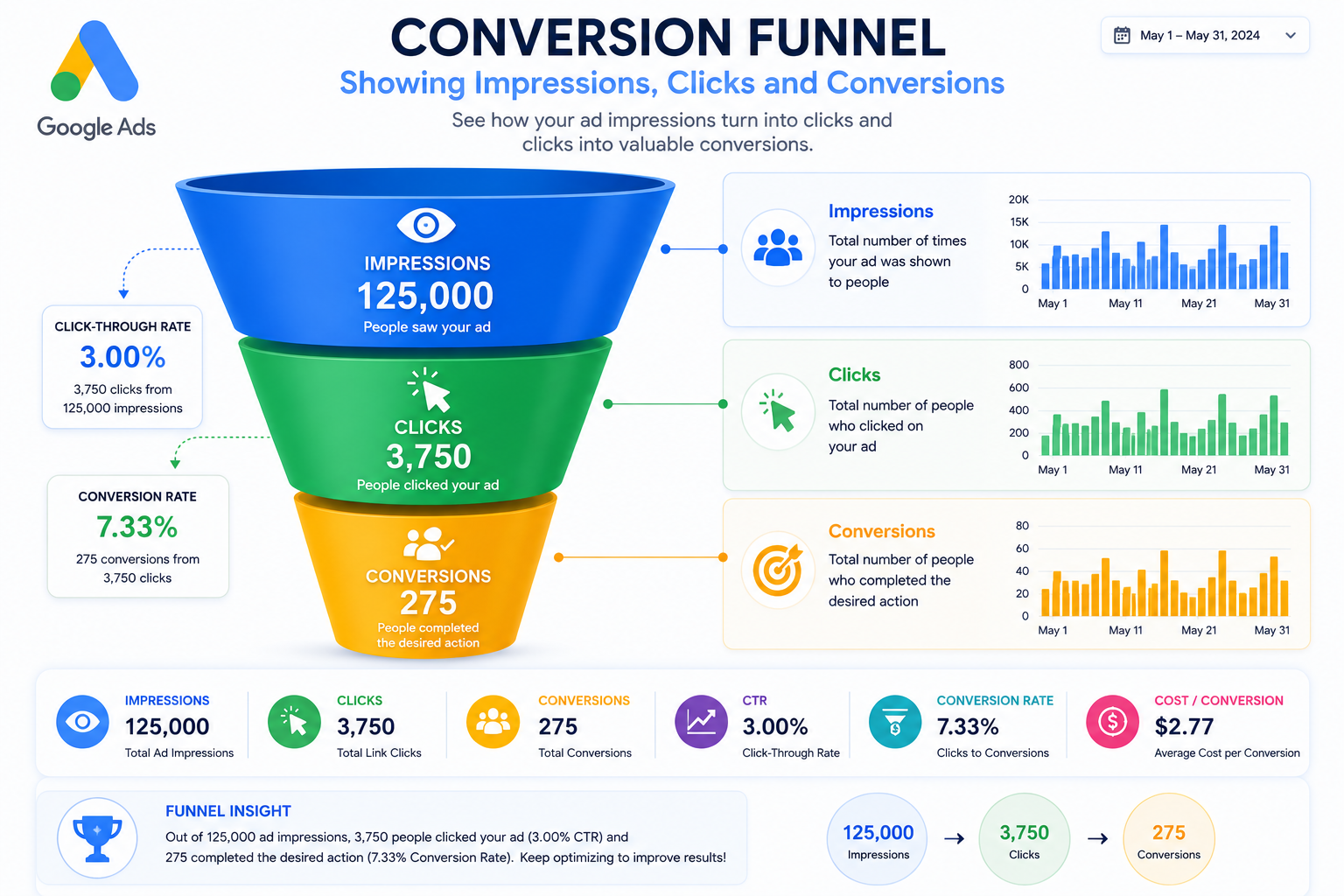
3. Conversion Rate
Conversion rate measures how many users complete a desired action.
This action could include:
- Purchases
- Form submissions
- Phone calls
- Email signups
- Downloads
Conversion Rate = (Conversions ÷ Total Visitors) × 100
This KPI directly reflects marketing campaign performance.
And honestly, many advertisers focus too much on traffic while ignoring conversions. That’s a costly mistake.
4. Return on Ad Spend (ROAS)
Return on ad spend measures revenue generated from advertising campaigns.
ROAS = Revenue Generated ÷ Advertising Spend
If you spend ₹10,000 on ads and generate ₹50,000 in sales, your ROAS becomes 5:1.
This KPI helps businesses understand profitability.
Most eCommerce brands rely heavily on ROAS because it directly connects marketing spending with revenue outcomes.
5. Customer Acquisition Cost (CAC)
Customer acquisition cost shows how much money you spend to acquire one customer.
CAC = Total Marketing Spend ÷ Number of New Customers
This customer acquisition metric becomes especially important for startups and service-based businesses.
If acquiring customers costs more than customer lifetime value, growth becomes difficult.
6. Cost Per Lead (CPL)
Businesses focused on lead generation strategy often track CPL.
This KPI measures the amount spent to generate one lead.
For industries like:
- Real estate
- Education
- Healthcare
- Digital services
CPL matters more than direct purchases because sales happen later through follow-up communication.
7. Bounce Rate
Bounce rate measures how many users leave your website without interacting.
A high bounce rate may indicate:
- Slow website speed
- Poor landing page design
- Weak content relevance
- Bad mobile optimization
Because user experience affects SEO and paid advertising performance, bounce rate deserves attention.
8. Impressions and Reach
These metrics measure visibility.
- Impressions: Total times your ad appears
- Reach: Total unique users who see your ad
Businesses focused on brand awareness campaigns often prioritize these KPIs.
Still, impressions without engagement rarely produce meaningful results.
Practical Examples of KPI Usage
Example 1: eCommerce Brand
An online clothing store tracks:
- ROAS
- Conversion rate
- CPC
- Cart abandonment rate
If conversion rates drop, the business may improve product pages or checkout speed.
Example 2: Local Service Business
A digital marketing agency may track:
- Cost per lead
- Phone call conversions
- Lead quality
- Customer acquisition cost
Because lead quality matters more than traffic volume.
Common KPI Tracking Mistakes
Focusing Only on Vanity Metrics
Likes, impressions, and followers may look impressive. But they don’t always generate revenue.
Ignoring Attribution Models
Customers often interact with multiple touchpoints before buying.
If businesses only track last-click conversions, they may underestimate earlier marketing channels.
Tracking Too Many Metrics
Some dashboards contain hundreds of data points.
That creates confusion.
Instead, focus on KPIs directly tied to business goals.
Not Setting Benchmarks
Numbers without context mean very little.
A 2% conversion rate might be excellent in one industry and poor in another.
Expert Tips for Better KPI Analysis
Use Real-Time Analytics Tools
Platforms like:
- Google Analytics 4
- Google Ads
- Meta Ads Manager
- Looker Studio
help marketers monitor performance continuously.
Segment Your Data
Analyze KPIs by:
- Device type
- Location
- Audience demographics
- Traffic source
Sometimes mobile users convert differently than desktop users. Small details reveal valuable insights.
Optimize Landing Pages
Even strong advertisements fail if landing pages perform poorly.
Improve:
- Page speed
- Mobile responsiveness
- CTA placement
- Content clarity
Conclusion
Digital advertising success doesn’t happen through guesswork anymore. Businesses now have access to detailed performance data that reveals what works and what fails.
And honestly, that’s a huge advantage if you use the right KPIs.
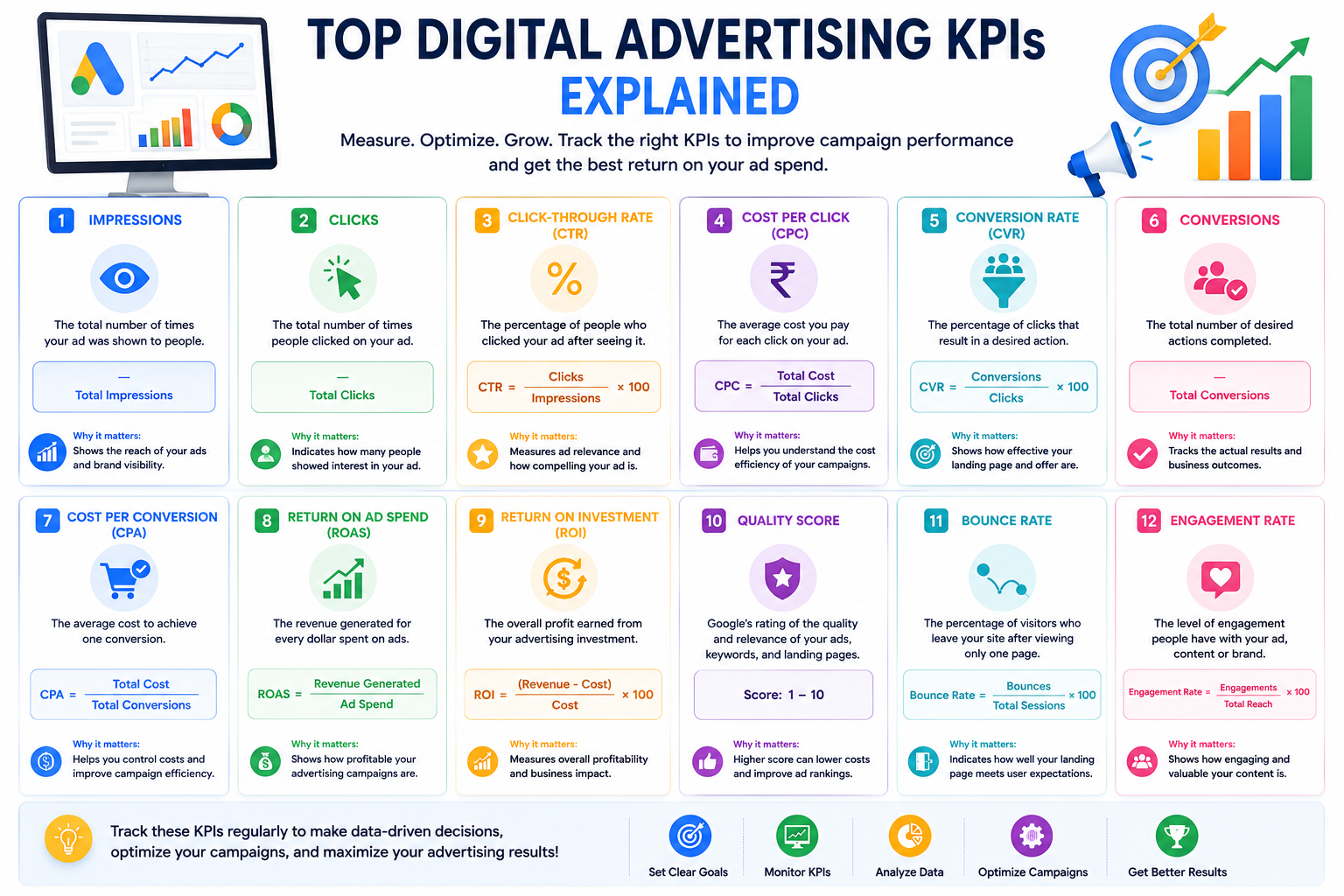
Metrics like click-through rate, conversion rate, ROAS, customer acquisition cost, and cost per lead help businesses make smarter marketing decisions. They also reduce wasted spending and improve long-term growth.
Track the KPIs that align with your business goals. Ignore vanity numbers. Focus on metrics tied to revenue, engagement, and customer behavior.
That’s where real performance marketing success begins.
Want better results from your digital advertising campaigns?
Start tracking the right Performance Marketing KPIs today and make smarter data-driven decisions that actually grow your business.
Need help improving campaign performance, conversion tracking, or online advertising ROI? Contact a trusted digital marketing expert and turn your ad spend into measurable growth.
